We usually worry about dropping our glasses, scratching the lenses, or losing them somewhere between the car and the coffee shop. But there's another everyday threat that's easy to overlook: heat.
Leaving your glasses in a hot car, storing them beside a sunny window, or cleaning them with very hot water may affect both the lenses and frames over time. But how hot is too hot? And if your glasses have already spent a little too much time in the heat, are they ruined?
Let's break down what heat can actually do to your glasses—and how to keep them in better shape.
Quick Answer
Yes, excessive heat can damage glasses. High temperatures may affect lens coatings, change the shape of some frames, and weaken certain materials or attached components over time. A brief exposure to warmth doesn't necessarily mean your glasses are ruined, but repeated or extreme heat is best avoided.
Quick Look
· How heat can affect your lenses
· What happens to different types of frames
· Everyday places that can get your glasses too hot
· Signs that heat may have caused damage
· What to do if your glasses get overheated
· Simple ways to protect your glasses from heat
1. Can Heat Really Damage Your Glasses?
It can—but usually not from simply wearing them on a warm day.
Glasses are designed to handle normal everyday temperatures, so you don't need to panic every time the weather gets warm.
The bigger concern is extreme or prolonged heat, especially when your glasses are left somewhere hot for a long time.Think about the difference between wearing your glasses outside on a sunny afternoon and leaving them on the dashboard of a parked car. The first is normal use. The second can expose them to much more intense heat.
Heat damage can also build up over time. Your glasses may not look different immediately, but repeated exposure can eventually affect lens coatings, frame shape, or small components.
So, the real rule isn't simply “hot weather = bad for glasses.” It's more like:
The hotter, longer, and more often your glasses are exposed to extreme heat, the greater the risk of damage.

2. What Happens to Your Lenses in High Heat?
When it comes to heat, the lenses themselves aren't always the biggest concern. Lens coatings can be more sensitive.
Lens Coatings Can Be Affected
Many prescription lenses have additional coatings, such as anti-reflective or other protective treatments. Under excessive or repeated heat exposure, these coatings may become damaged.
Depending on the situation, you might eventually notice:
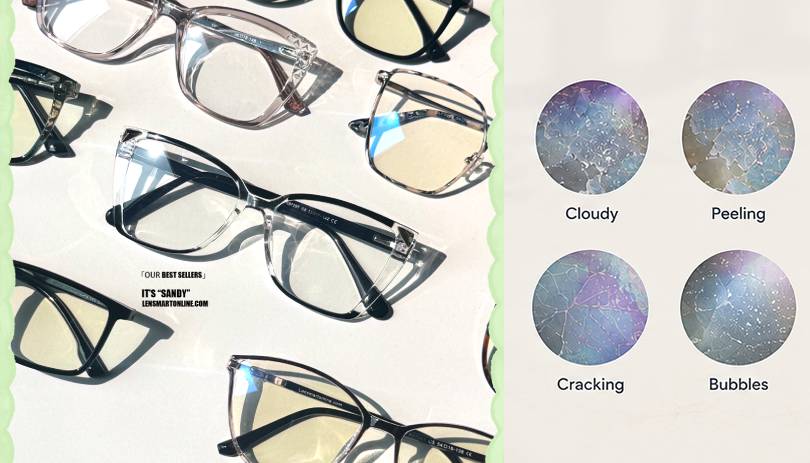
· Cloudy or hazy areas
· Peeling or flaking
· Tiny cracks or lines
· Bubbles or uneven-looking patches
· Changes in how light reflects from the lens
Once a lens coating has started to peel or crack, cleaning your glasses won't restore it.That's why prevention is much easier than trying to fix the problem later.
Be Careful With Sudden Temperature Changes
Extreme temperature changes aren't ideal for your lenses either.
For example, imagine your glasses have been sitting somewhere very hot and you immediately rinse them with very cold water. The sudden change in temperature can put additional stress on the lens and its coatings.
The safer approach?
Let your glasses return to room temperature naturally before cleaning them.
3. What Happens to Your Frames?
Different frame materials react differently to heat, so there's no single answer for every pair of glasses.
Plastic and TR90 Frames
Plastic-based frames can become softer when exposed to high temperatures.
With enough heat or prolonged exposure, some frames may:
· Lose their original shape
· Become slightly warped
· Fit differently on your face
· Develop stress or deformation
This can be especially frustrating because even a small change in shape can make your glasses sit unevenly.
Metal Frames
Metal frames generally don't react to heat in exactly the same way as plastic frames. However, high temperatures can still affect finishes, coatings, adhesives, nose pads, and other attached components.
In other words, “It's metal, so heat doesn't matter” isn't quite true.The specific material and construction of your glasses both matter.
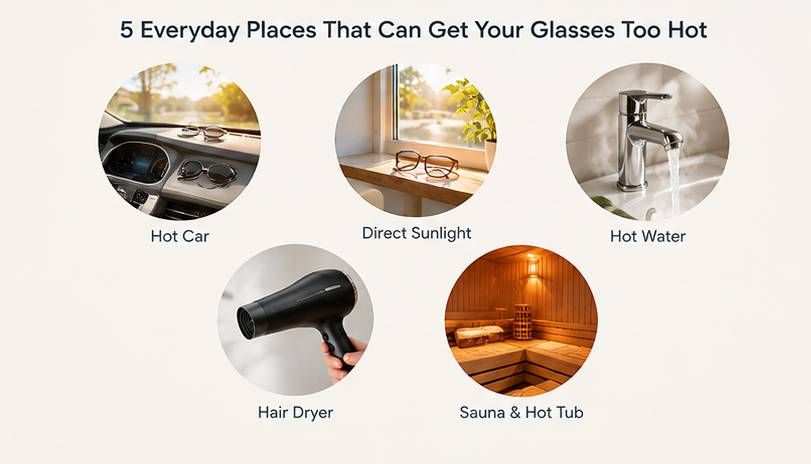
4. 5 Everyday Places That Can Get Your Glasses Too Hot
You don't need to work in a laboratory to expose your glasses to excessive heat. Some of the biggest risks can happen during completely ordinary days.
1) Inside a Hot Car
This is one of the biggest everyday problems.A parked car can become extremely hot, especially when your glasses are sitting directly on the dashboard or near a sunny window. Even if you're only planning to be away for a little while, it's better to take your glasses with you or store them somewhere protected.
2) Direct Sunlight by a Window
A sunny windowsill might seem like a harmless place to leave your glasses while you work, read, or relax.But prolonged direct sunlight can create a much warmer environment than the surrounding room.Bright window + long exposure = not the best storage spot.
3) Hot Water
Your glasses don't need a hot shower. Very hot water can affect lens coatings and may also expose frames to unnecessary heat. When cleaning your glasses, use an appropriate cleaning method rather than reaching for the hottest water from the tap.
4) Hair Dryers
If you tend to leave your glasses on the bathroom counter while getting ready, be careful with the hair dryer. Direct hot air can expose the lenses and frame to unnecessary heat—especially when the glasses are sitting only a few inches away.
5) Saunas and Other High-Heat Environments
Saunas, hot tubs, and other high-temperature environments are another situation where it's better to leave your glasses somewhere cooler and protected.Your glasses don't need to join you for every part of the relaxation session.
5. How Do You Know If Heat Has Damaged Your Glasses?
Not every scratched or cloudy lens has been damaged by heat. Normal wear, cleaning mistakes, and age can cause similar problems.
Still, a few changes are worth paying attention to, such as a cloudy or uneven lens coating, peeling, cracking, or bubbling on the lens surface, a warped frame, glasses that sit unevenly or feel less comfortable, or vision that suddenly seems different or less clear.
If the problem is only a minor frame adjustment, an optical professional may be able to help.
But if the lens coating is visibly damaged or your vision is affected, it's better to have the lenses checked rather than continuing to wear them and hoping the problem disappears.
6. What Should You Do If Your Glasses Get Too Hot?
Don't panic if you accidentally leave your glasses somewhere warm.If they were exposed to heat for a short period, the best first step is simple:
Move them to a cooler place and let them return to room temperature naturally.
Avoid trying to cool them down quickly with ice or very cold water.If the frame appears slightly bent, don't immediately try to force it back into shape. You could make the problem worse or damage the frame. Instead, have it professionally adjusted if possible.
And if you notice peeling or cracking on the lens coating, remember that coatings generally can't be restored through cleaning. A professional can help determine whether the lenses need to be replaced.
7. How to Protect Your Glasses From Heat
The good news? Protecting your glasses from heat doesn't require much extra effort.
A Few Simple Habits Can Help:
Keep them in a case.
When you're not wearing your glasses, a hard case provides more protection than leaving them loose in a bag or on a car seat.
Don't leave them in a parked car.
Especially avoid the dashboard or other areas exposed to direct sunlight.
Store them away from direct sunlight.
A cool, shaded place is a better home for your glasses.
Avoid very hot water when cleaning.
Use an appropriate lens-cleaning method instead.
Keep them away from direct heat.
Hair dryers, heaters, radiators, and other heat sources aren't ideal places to store your glasses.
Let them cool naturally.
If your glasses have been exposed to high temperatures, give them time to return to room temperature before cleaning or handling them extensively.
Do vs. Avoid
Do | Avoid |
Store glasses in a protective case | Leaving them on a hot dashboard |
Keep them in a cool, shaded place | Storing them in direct sunlight |
Use appropriate lens-cleaning methods | Using very hot water |
Let overheated glasses cool naturally | Sudden extreme temperature changes |
Get damaged frames professionally adjusted | Bending them back by force |
When Should You Replace Heat-Damaged Glasses?
Not every heat-related problem means you need a new pair.
If the frame is only slightly out of alignment, a professional may be able to adjust it.
However, visible lens coating damage, significant frame deformation, or changes that affect your vision are stronger reasons to consider professional evaluation or replacement.
Your glasses may still look wearable from the outside, but if the lenses are affecting your vision, that's not something to ignore.
When in doubt, have your glasses checked by an optician.
Final Thoughts
Heat is one of those things you might not think about until your glasses start showing signs of damage. A few simple habits—keeping them out of hot cars, away from direct heat, and stored properly—can go a long way toward protecting both your lenses and frames.
Keep your glasses cool, protected, and ready for wherever the day takes you.
Related Articles
Glasses Fogging Up? How to Stop Lens Fog in Summer Heat, Masks, and Cold Weather
Chef’s Eyewear: How to Prevent Lens Fogging in High-Heat Kitchens
